Does Tulsi Tea Have Caffeine?
Pure tulsi tea — steeped holy basil leaves — is caffeine-free. Tulsi is often blended with green, black, or matcha tea; those blends contain whatever caffeine the base tea provides.
Zero caffeine if the only ingredient is holy basil.
How it compares
Tulsi is traditionally used in Ayurveda as an adaptogen — a category of herbs studied for stress response. It's caffeine-free, so it works as an evening or afternoon wind-down. Blends that add green tea add caffeine.
| Drink | Caffeine (mg) |
|---|---|
| Pure tulsi tea (8 oz) | 0 |
| Tulsi green tea blend (8 oz) | 30 |
| Tulsi + matcha blend | 50 |
Caffeine-free picks we recommend
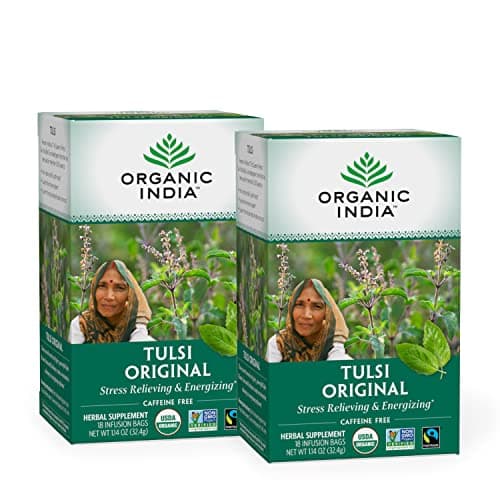
Traditional Indian tulsi (holy basil) tea — adaptogenic, caffeine-free, used in Ayurveda for stress support. USDA Organic, Non-GMO.
Frequently asked
Is tulsi the same as basil?
Close cousins, not identical. Culinary sweet basil is Ocimum basilicum. Tulsi (holy basil) is Ocimum tenuiflorum — a different species with a more clove-like, peppery flavor.
Is tulsi safe to drink daily?
Tulsi has been consumed daily in Indian households for centuries. It may interact with thyroid medications and blood thinners — check with your doctor if you're on either.